

What Are WPC Doors? Wood Plastic Composite Explained
Babeco · 2026
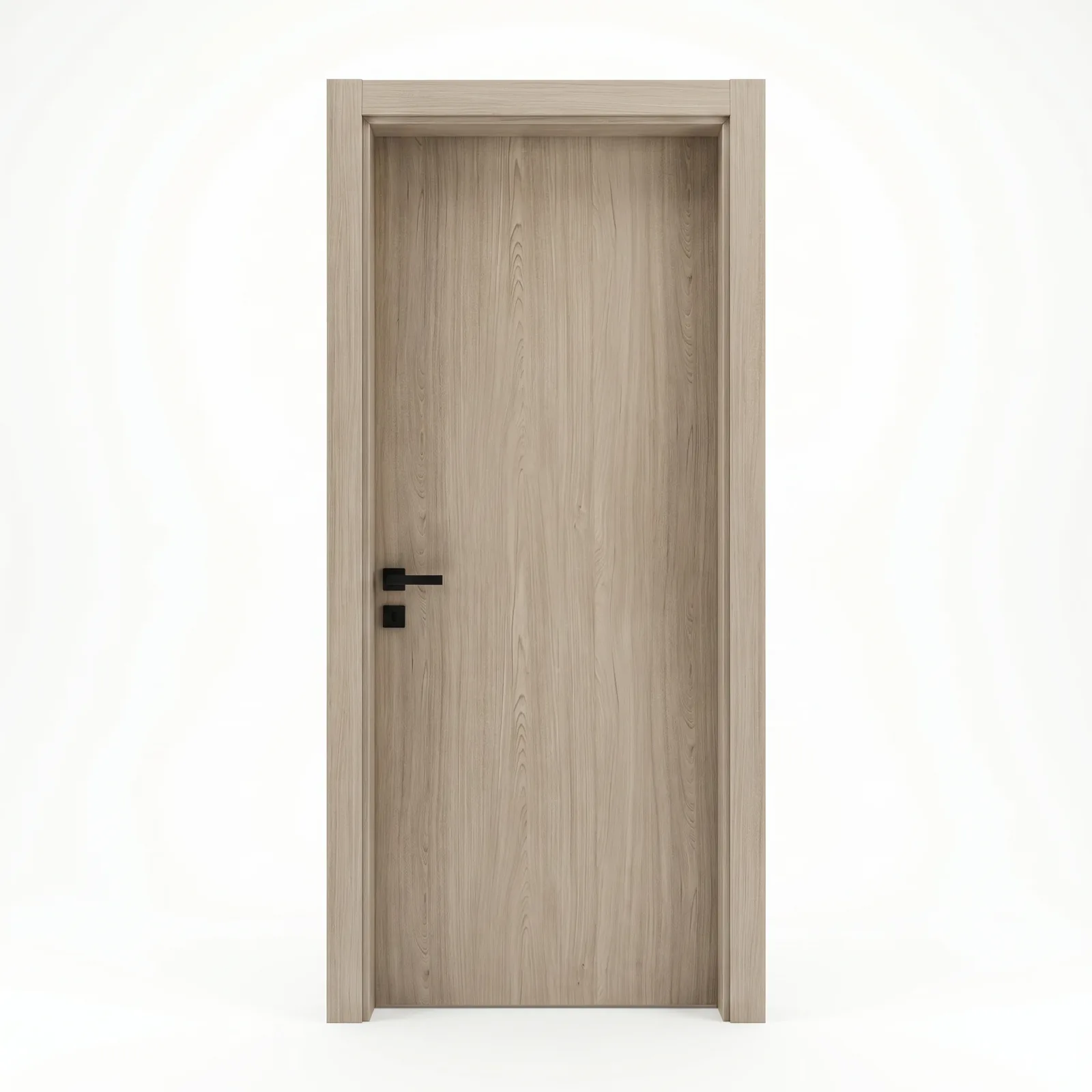
What are WPC doors?
WPC doors are interior doors made of Wood Plastic Composite: fine wood powder blended with polymers and extruded into a hollow profile with ribs inside. Babeco makes them in its factory in 6th of October with a 4.5 cm leaf; they work like wood but do not absorb water or attract termites, and carry a lifetime warranty against water, moisture, insects and termites.
It is worked like wood: it can be cut, sanded, screwed and glued. But it does not soak up water, so it does not swell, rot or attract termites the way solid wood and MDF can.
How it is made
- Wood powder and polymers are mixed with other components in fixed proportions.
- The mix is heated and pushed through a steel mould (an extrusion die). The shape of the mould decides the profile: a door leaf, a frame or a wall panel.
- The profile is cooled, cut to length, sanded, and then covered with a decorative PVC film using PUR glue. That film gives the colour and wood grain.
Where WPC is used at home
- Interior doors, especially bathroom and kitchen doors, where water and steam ruin wood.
- Door frames and cladding around the opening.
- Fluted wall panels for TV walls, bedrooms and reception areas.
- Bathroom furniture that sits close to water.
What WPC is not
It is not solid plastic. A PVC door is plastic all the way through and is heavier; WPC contains wood powder, which changes how it is worked and how the surface film bonds. See our WPC vs PVC guide for the details.
It is also not a replacement for an armored front door. For the main entrance, choose a steel armored door.
Buying tip
Ask any seller what is inside the profile. Real WPC looks the same throughout a cut section, with no wood strip down the edges. Babeco interior doors in WPC start from 9,000 EGP.
Next steps
See how a WPC door is built in what is inside a WPC door, compare it in WPC vs PVC, and browse the WPC doors.
Common questions
What does WPC door mean?
A door made of WPC, Wood Plastic Composite: fine wood powder blended with polymers and extruded into a hollow, ribbed profile. It is neither solid wood nor pure plastic; it works like wood but does not swell with water or attract termites. Babeco makes WPC doors in 6th of October with a 4.5 cm leaf and a lifetime warranty.
Are WPC doors made of wood?
Not solid wood. They contain fine wood powder blended with polymers, which is why they are cut, screwed and sanded like wood but do not swell with water or attract termites. A real WPC door has the same material throughout, with no wood strip down the edges. Ask for a cut section if you are unsure.
Are WPC doors good?
Yes, when the door is true WPC: it resists water and termites, needs no painting and is light on the hinges. A Babeco door has a 4.5 cm leaf, a film bonded with German PUR glue and a lifetime warranty against water, moisture, insects and termites. Quality varies between makers, so check what is inside before you buy.
What are the disadvantages of wood alternatives?
Many cheap "wood alternative" boards are really MDF or chipboard, which still swell with water. True WPC does not swell, but it costs more than HDF, cannot be carved like solid wood, and its colour is a surface film, so a deep scratch shows. See the pros and cons of WPC doors for the full list.
Is a wood alternative water-resistant?
Yes. Babeco's wood alternative (WPC panels and doors, and our foam-board chip board) does not absorb water, so it does not swell like MDF or normal chipboard. Check what any other "wood alternative" is made of: MDF versions still swell.