

What are the problems with PVC doors?
PVC doors resist water, but they are usually heavy (often above 30 kg for the leaf), so hinges loosen and the door starts to drop, and their colour film is glued onto smooth plastic, so it can lift at the edges with heat and time. They also feel like plastic. A Babeco WPC leaf weighs 25–27 kg and its film is bonded on a sanded surface with German PUR glue.
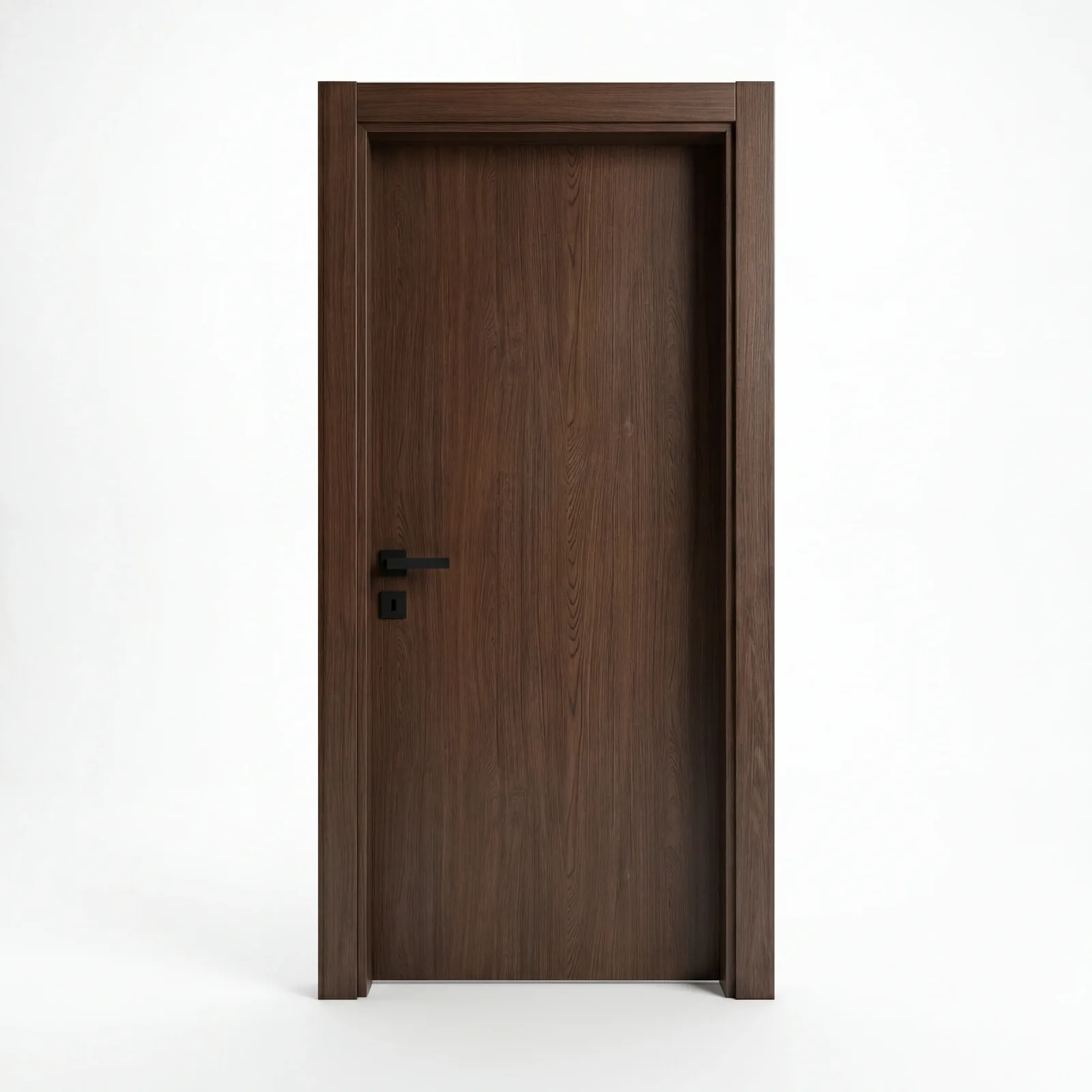
PVC door problems and the WPC answer
| PVC problem | Why it happens | Babeco WPC |
|---|---|---|
| Door drops, hinges loosen | Leaf usually above 30 kg | Leaf 25–27 kg |
| Film lifts at the edges | Glue on smooth plastic | Sanded surface, German PUR glue |
| Plastic feel and sound | Plastic throughout | Wood powder inside, closer to wood |
| "WPC" that is really PVC | Cheap doors sold under the WPC name | True WPC profile, 4.5 cm leaf, 5 mm ribs |
What PVC does well
To be fair, PVC does not absorb water and termites do not eat it, so it beats wood and HDF in bathrooms. The problems are weight, film bonding and feel.
How to avoid a PVC door sold as WPC
Ask for the leaf weight and a cut section. A leaf well above 30 kg or plastic throughout usually means PVC. See how to spot a fake WPC door.
WPC has limits too
WPC costs more than HDF and shows deep scratches because its colour is a film too. Read the pros and cons of WPC doors and WPC vs PVC.
People also ask
Are PVC doors waterproof?
Yes, PVC does not absorb water. The usual problems are weight and film bonding.
What are the problems with WPC doors?
A higher price than HDF, a film that shows deep scratches, and big quality differences between makers.
Which is better for a bathroom, PVC or WPC?
Both resist water; WPC is lighter on the hinges and its film bonds better.